Loading page

An Australian thermal and night vision retailer inherited a sluggish BigCommerce store from previous owners, and the technical debt that came with it. We migrated them to a clean Shopify build, fixed the SEO foundations, and the numbers turned around within months.
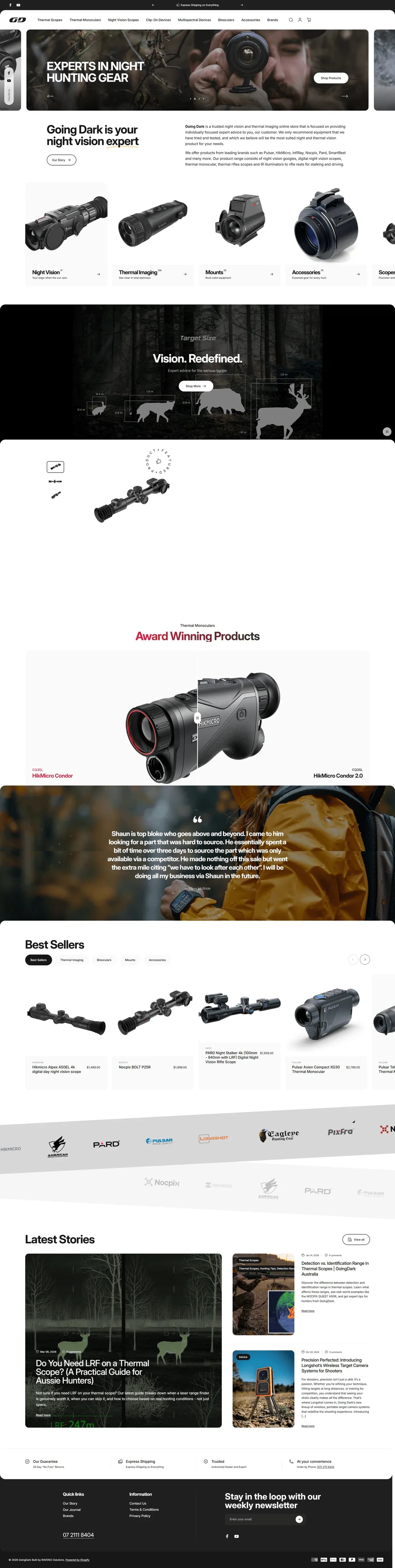
Jo's GoingDark inherited its BigCommerce store from the previous owners, along with years of technical debt that came with it. Multiple developers had each done their own thing over time. The result was the classic mess: clashing implementations, doubled-up work, gaps where there should have been care. Hundreds of links went to 404 pages. Images had no alt text. The blog hadn't been updated in months.
GoingDark came to us via a few Facebook recommendations, originally for minor fixes. As we started working through the list, the bigger picture came into focus: the SEO foundations were full of loopholes the previous teams hadn't seen or hadn't fixed. The conversation with Jo shifted from "fix the small stuff" to "maybe it's time to rebuild properly".
After a long phone call with Jo about the pros and cons, we decided to migrate from BigCommerce to Shopify. BigCommerce has its own strengths, but for the way Jo runs the store day to day, Shopify's user-friendliness was going to make their life easier. Rebuild rather than patch.
We chose a paid Shopify theme as the foundation, a deliberate decision that saved GoingDark thousands compared to a fully custom build. Then we customised it to suit how they sell: niche, expertise-driven, with the kind of personality a generic theme would never have on its own.
Alongside the rebuild we cleaned up the SEO mess: fixed the 404s, added alt text to every product image, restructured pages so search engines could understand what GoingDark sells. The bigger ongoing conversation has been about positioning: helping Jo see that competing in a niche means standing out, not copying what bigger players do.
Conversion Rate (MoM)
Revenue per User (MoM)
Traffic from Organic
Paid Search
GoingDark relaunched on Shopify on 27 January 2025. By April, three months in, the trajectory had clearly turned around. Purchaser rate grew 38.5%. Organic search traffic grew 12.5%. Average session duration jumped 57%, with visitors spending dramatically more time on the site than they were before.
A fresh month of numbers tells the same story. Month on month, sessions fell 28%, but every step of the buying funnel went up: add-to-carts rose 12%, checkouts reached rose 10%, and completed purchases rose 17%. The conversion rate climbed 62%. Fewer people are landing on the store, but far more of them are there to buy. In GA4, organic search now drives 64% of all traffic, organic and direct together make up 95%, and there's no paid search at all, so none of this was bought. Revenue per user is up 16%. The old store pulled in people who browsed and left; the rebuild and the ongoing SEO brought in people actually looking for what GoingDark sells.
The site itself sits at 87 Performance, 100 Accessibility, 92 Best Practices and 92 SEO in PageSpeed on desktop, with First Contentful Paint at 0.5s and Largest Contentful Paint at 0.8s. Fast for any ecommerce site, fast enough on Shopify that the platform overhead doesn't tell on day-to-day shopping.
The harder shift has been ongoing: pushing back gently when Jo's tempted to copy what bigger competitors are doing. In a niche category like night vision, the brand that stands out wins. We're still working with GoingDark monthly on that, alongside the SEO foundation we rebuilt during migration.

Most thermal and night vision sites push product first and trust second. GoingDark's homepage flips that: making the curated, expert-led approach visible before the catalogue. Visitors get a sense of why they should buy here, not just what's for sale.
Hunters often shop by brand. They trust Pulsar, they're loyal to HikMicro, they've been told PARD is the right call. The brands section surfaces brand-led navigation right on the home page, so buyers can jump straight to the gear they're after instead of scrolling through a generic catalogue.

Hunters spending $4,000 on a thermal scope want to weigh options, not just look at one. The product views are built around comparison: specs, prices and features visible side by side, instead of buried in tabs across multiple pages.
Two minutes of questions and I'll come back with a scoped, fixed price and a timeline. No obligation.